Deprecated: Function WP_Dependencies->add_data() was called with an argument that is deprecated since version 6.9.0! IE conditional comments are ignored by all supported browsers. in /home/customer/www/stevedorst.com/public_html/blog/wp-includes/functions.php on line 6260

Blog

Volcanic Sprint on iTunes tomorrow!

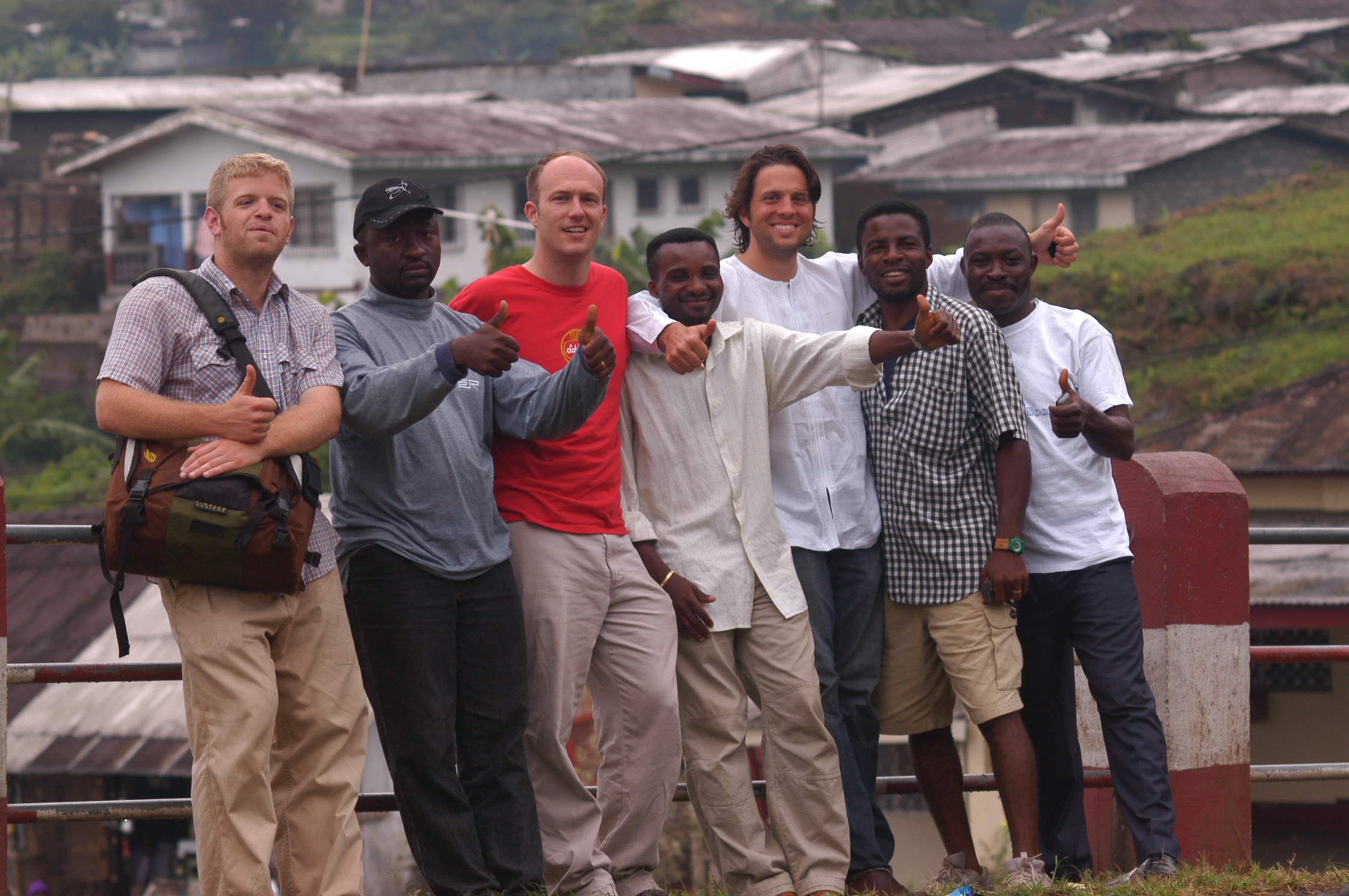
Volc Sprint crew

Seven years ago last month, with both legs dangling out of an old African military helicopter, I trained my film camera down at small dots of racers during the world’s most extreme running race. The participants in the Mt. Cameroon Race of Hope still had 25 miles and 10,000 vertical feet to go to reach the roof of West Africa. We screamed up the main drag from Molyko Stadium, spitting up red dirt above thatched-roof huts to Upper Farms with its thousands of joyous fans.

It was my first time directing a documentary. I had no cash. So I put everything on credit cards, hired a knowledgeable DP to head up filming, and then Dan Evans left Washington, DC to fly to Buea, Cameroon. Little did I know that it would go on to do well in film festivals, get distribution around the world, and remain to this day the only documentary that chronicles this extreme running race.

If you like documentary films or running, or appreciate projects that are really a wing-and-a-prayer, then spread the word about Volcanic Sprint.

Tomorrow, Volcanic Sprint goes live online, with its premiere on iTunes!

If you like documentary films or running, or appreciate projects that are really a wing-and-a-prayer, then spread the word about Volcanic Sprint. How can you help? Share the FB post that accompanies this blog post. Rate Volcanic Sprint on IMDB (we don’t have many ratings, and a few boneheads gave us 1 out of 10 ratings, so you can help counteract that . . . if you want!).

Watch the trailer here:

http://www.youtube.com/watch?v=F_YTDBqxd_Y&feature=share&list=PL00EB50F471DE4B3A

Check out the Volcanic Sprint website, where US endurance running legend Scott Jurek says: “Insurmountable challenges, true courage, a triumph of the human spirit. Inspiration for runner and non-runner alike!” US marathon record-holder Deena Kastor says, “This movie captures the competitiveness, danger, and heroism of the world’s most difficult marathon.” And 2009 NYC marathon champion Meb Keflezighi calls Volcanic Sprint “A wonderful movie that is uplifting and inspirational!”
 

Colombia shoot with the Canon 5D Mark iii

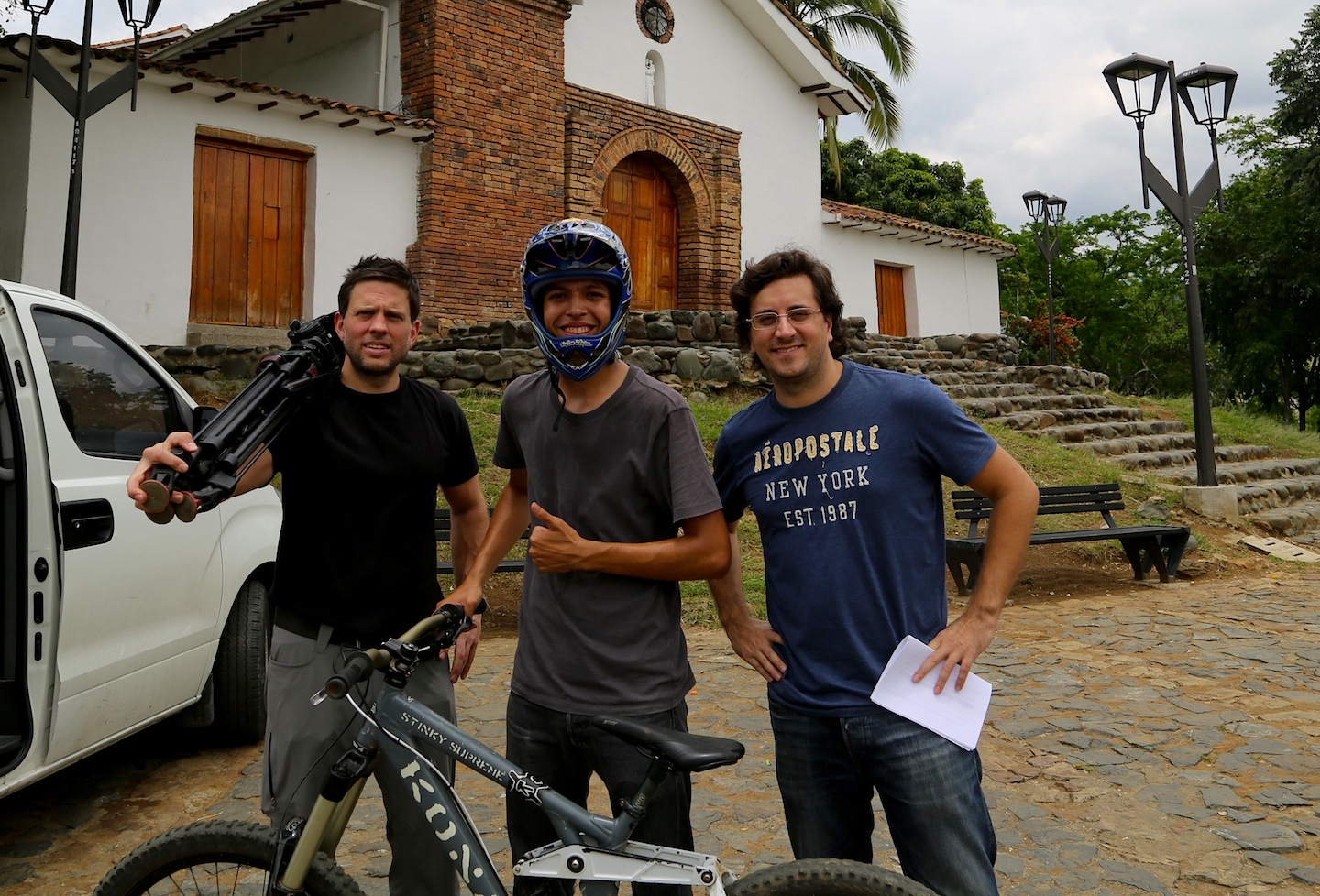
blogI’m in Cali, Colombia and using my new Canon 5D mark iii to direct and shoot a short documentary film here. Cali-native, Jose David Quintero, is the death-defying biker who flies down the mountain below San Antonio.

Here’s a short clip of stuff I shot yesterday and today, and edited tonight (not color graded). Music is not mine (it’s Morcheeba’s “Over and Over” from the “Big Calm” album. Buy it!

I used my new MYT glider. And found that a monopod, if used properly, can approximate the feel of a mini-jib. I used only two lenses, the Canon 16-35mm and the Canon 24-105.

Cali is much larger than I anticipated. Mountainous, its neighborhoods cling to San Francisco-like slopes. I couldn’t have done the shoot without Producer Santiago Chaher, the co-owner of Cefeidas Group, an international advisory group that does a lot of consulting across Latin America.

I’ll do another post later on other key discoveries: why Club is a better beer than either Poker or Aguila; why marranita is not all it’s cracked up to be (sorry Eulalia!); and how the cacophonous din of high heels threatened more than one interview.


TV Director in a Cowboy Hat (Part 1)

steve-cowboyHat

When I first got the call, I wasn’t wearing a cowboy hat. It was November 2010. The TV series was called “Survivor Tales.” It was its first year, and more an idea than a series. Produced by an upstart production company in DC with a skeleton staff, they’d just lost their DP/editor when he moved to NYC to work on a (now defunct) reality show, and outsourced creative to an underling. They were halfway through their third episode and needed some pickups in rural Minnesota . . . on a ranch . . . of a dog . . . named Dakota.

I was like, “Yeah, I’m in!”

First, I got familiar with the footage they had in-the-can. Unfortunately, it was rough. Master interviews in a server room, the rattle and hum of machines over voices. And a run-and-gun style that might have made sense on the battlefields of Afghanistan or Iraq (where my friends John Collin and Ryan Hill have captured some beautiful images, notwithstanding the inhospitable environment), but was just sloppy for this context.

The next day, I found myself at the University of Minnesota. It was sink-or-swim time, since we were a crew of two — the producer and me. I ran camera, lights, and audio. I found a deep, quiet hallway for the interviews. At the time, they only had budget for the Sony EX-1, so I needed all the depth I could wrangle. Then I started directing broll of the doctors, mostly lab setups to help bring to life their cutting-edge research.

The next day was more fun, chasing a black Lab around a 100-acre ranch. This dog, Dakota, had beaten brain cancer thanks to a revolutionary vaccine the doctors were hoping to adapt for people someday.

Footage from that first shoot eventually made it into episode #10, “Dakota’s Brain”:

The good thing about when a DP/editor skips town, the production company needs to find a replacement DP and editor. They liked my Minnesota footage, and then entrusted me with the writing and editing of the show.

Little did I suspect, but this gig would grow to me serving as DP, writer, and editor for 10 episodes over the next two years.

The next month, I flew to LA. where I spent four days with Toby Forrest, who was bravely overcoming an incredibly devastating spinal cord injury to become an accomplished actor and singer. The narrative arc on this story was amazing.

One night I followed Toby verité style to a gig at the Viper Room on Sunset. I got a Director credit on this show, which became episode #1, “Toby’s Story”:

Like every shoot, “Toby’s Story” had challenges. At the Viper Room, I would have preferred a second camera, and we weren’t allowed lights, tripod, or an assistant. Most challenging, on the final day we had about an hour of sunlight left to shoot a conclusive scene, but we were stuck in the Valley in Van Nuys and my producer didn’t have any ideas. What’s more, we didn’t have a wheelchair-enabled vehicle. What to do?

Fortunately, having graduated high school nearby (Redondo Union High!), I knew just the place. I took the wheel of Toby’s van, drove south on the 405, and pulled into Redondo Beach right at golden hour. “Toby’s Story” concludes with what I shot next. “Will I walk again, I don’t know,” muses Toby in extreme closeup as he gazes toward the sun-dappled Pacific. “Will I be independent again? I sure hope so. Will I adapt to my circumstances? Most definitely.” Cut to Toby’s point of view. A jogger, in silhouette, exits frame left. Music track fades up. It is the end of Suite 68, which brought down the house at the Viper Room. Against a wistful final guitar lick, Toby’s own lyrics close the episode: “All alone in my misery.”

————————————————————-

Steve Dorst earned credits as DP, Writer, and Editor on 10 episodes and Director on 4 episodes of the TV series, Bench to Bedside, which was acquired in 2013 by the commercial television arm of Australian Broadcast Corporation for global distribution. With a producer, Dorst captured inspirational stories and cutting-edge research on location across the country. Filmed documentary-style, the series is about true stories, real diseases, and high stakes.