Deprecated: Function WP_Dependencies->add_data() was called with an argument that is deprecated since version 6.9.0! IE conditional comments are ignored by all supported browsers. in /home/customer/www/stevedorst.com/public_html/blog/wp-includes/functions.php on line 6260

Blog

Directing in Brazil: In a Favela, an Oasis

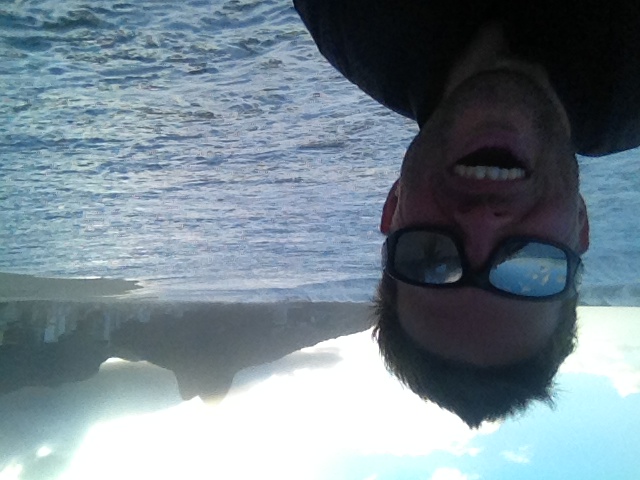
Wphoto11hat is a favela? When I left Washington DC for a filming trip in Rio de Janeiro last week, I was apprehensive. It was my first trip to Latin America’s biggest country.  And instead of filming a documentary film on the beaches of Ipanema or Copacabana, I’d be a director/producer on a commercial in some of Rio’s poorest slums (favelas). What would I find? (I took this crazy pic on accident as a wave crashed on me during a walk on Ipanema beach!).

To prepare, I read a book entitled “Culture is our Weapon,” by Patrick Neatte and Damian Platt. It chronicles the severe poverty, ubiquitous drug trafficking, and endemic violence of the favelas. It follows the birth of AfroReggae, a transformative nonprofit that gives at-risk youth opportunities to shine, primarily in art and music (samba, hip hop, dancing, drumming, etc).

At that point, I spy three teenage boys in shorts and flip flops—and automatic rifles slung over their shoulders.

I stayed in Ipanema with an old friend, Neil Breslin, who flew in from Luanda, Angola to be the Unit Producer. Neil runs a firm connecting businesspeople in and out of Angola and speaks perfect Portuguese. He also owns apartments in Rio, so it was a great change of pace to stay at a friend’s place rather than a hotel.
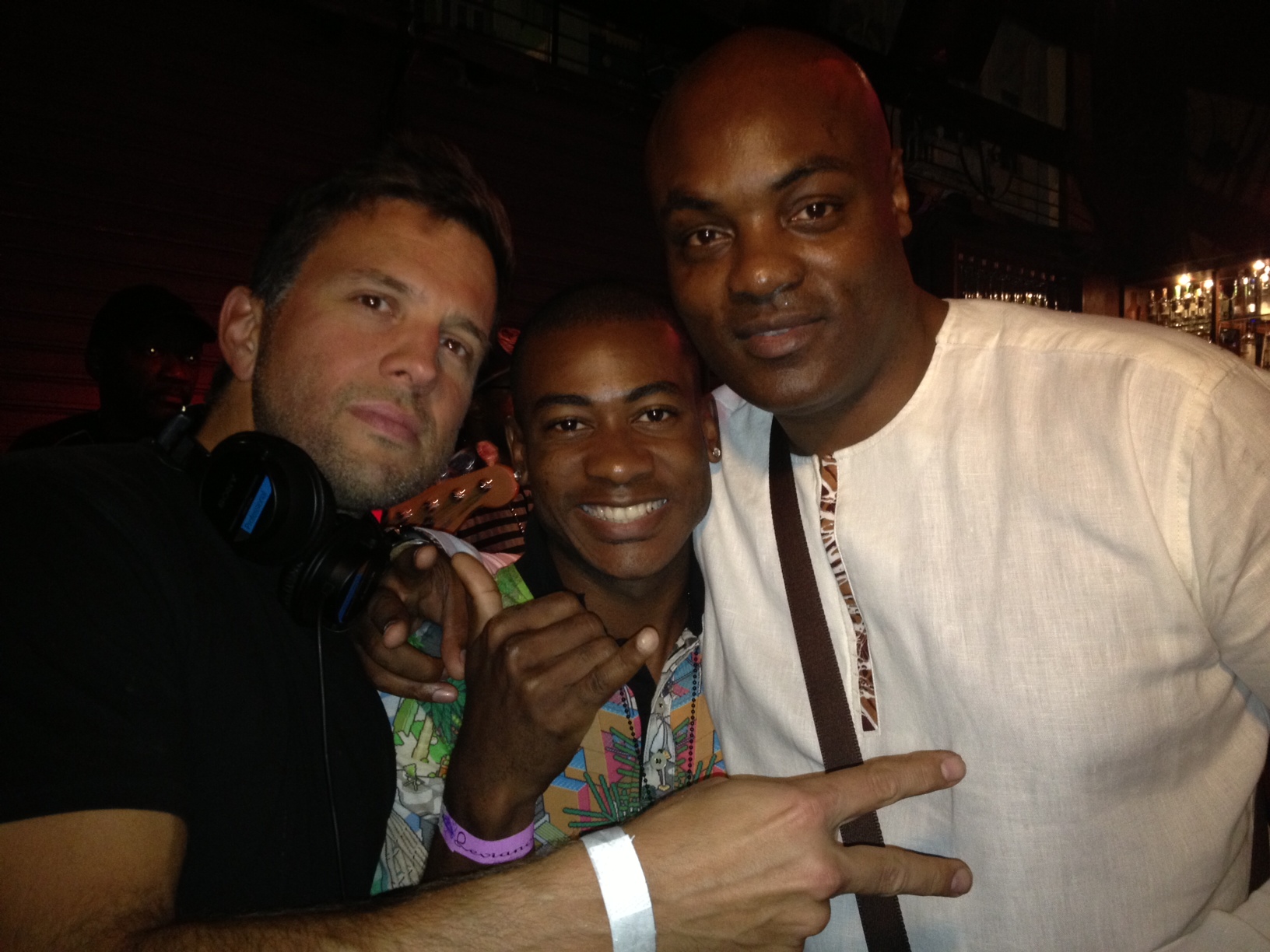
photo-mz
Wrapped AfroReggae shoot at AR21 concert, with AfroSamba lead singer LeCao Magalona and M’zée Fula-Ngenge. Leviano Bar in Lapa neighborhood of Rio de Janeiro.

The first morning, we turn inland to a favela called Vigário Geral. As the stunning seaside landscape recedes behind us, Rio is revealed as a sprawling mega-city. Most striking is the trajectory of the favelas, precipitous, straggling, and clinging to hillsides.

Our AfroReggae contact drives with us. Then outside Vigário, a local teenage boy meets us. He sits up front and is our ticket in. There’s one way in and out, a desolated and looping off ramp that issues to a main street blocked by two industrial trash containers. Culture is our Weapon describes why favela residents erect such blockades: to keep out overzealous police who have been known to rush in with assault vehicles, purportedly chasing drug traffickers, shoot with impunity, and leave just as quickly. It occurs to me that AfroReggae was established after the massacre of 21 innocents in August 1993, right where I am now.

At this point our genial driver, Elton, turns into a spider’s web of narrow alleyways. Homemade super-sized speed bumps pepper the route, so we top out at 5 mph, and Elton executes an exaggerated zigzag for several minutes. We trace a large “U” until we rejoin the main street again. We’re in.

At that point, I spy three teenage boys in shorts and flip flops—and automatic rifles slung over their shoulders. This sent a shudder through me. I tell my car mates this is freaking me out. That I’m only used to people in uniforms with guns. Neil counters that we’re actually safer here. The boys won’t harm us. They’re simply keeping the status quo (to protect their drug turf)—whereas if you get robbed in Ipanema or Copacabana, good luck getting justice.

I hadn’t filmed a frame yet and already my worldview was turning upside down. Safer neighborhoods with gun-toting teenagers? Citizen blockades to keep out police? Moreover, I was already seeing parts of Brazil that most Brazilians never see.

AfroReggae’s impressive, new four-story community center was built in 2010. It is clean and imposing, with a gaggle of children playing ping pong and foosball in the courtyard. It has all the collective good energy of a YMCA. A massive sculpture of a fist extends from the roof — is it a warning or an expression of pride?

The first person I meet is Anderson Sa, AfroReggae’s co-founder and the lead singer of AR21, formerly known as AfroReggae Band. I’d seen Favela Rising, an average documentary about a fascinating subject, where Sa factored prominently. I shot Sa in his recording studio, practicing with his band, and mentoring a younger singer, LeCao Magalona, who headlines the AfroReggae band AfroSamba. Both Sa and Magalona prove to be charismatic guys and very skilled musicians.

My client for this job is a private sector company based in Reston, Virginia. They are growing their business overseas, with Brazil one of the priority countries. So they hired me to make a series of spots that will be distributed in Brazil first and foremost. I’m shooting, directing, writing, and producing. I’ve already written the script. The voiceover is in Portuguese. The story needs to resonate with a local audience—which is a change for me. Usually when I travel to film overseas, the resulting film or video is to be viewed by Americans.

All this is going through my head at nightfall as I’m getting the last few shots. A plague’s worth of mosquitoes have descended on us from a nearby marsh and are harassing my young on-camera protagonist. The poor boy can’t concentrate on anything else. People are streaming home.

Both Sa and Magalona prove to be charismatic guys and very skilled musicians.

Since my morning encounter with the rifle-toting teenagers, this is the first evidence that Vigário is an unsafe, unhealthy place. The dozens of people I’ve met are authentic, nice, and all doing their own thing like anybody in any neighborhood. I played soccer with some boys and challenged a young man to a pull-up contest (I lost). I saw (and filmed) a steady stream of talented youth in violin lessons, samba classes, and all manner of dance practices—from ballet for little tots to African dance for seriously legit young adults.

AfroReggae has helped create an oasis.
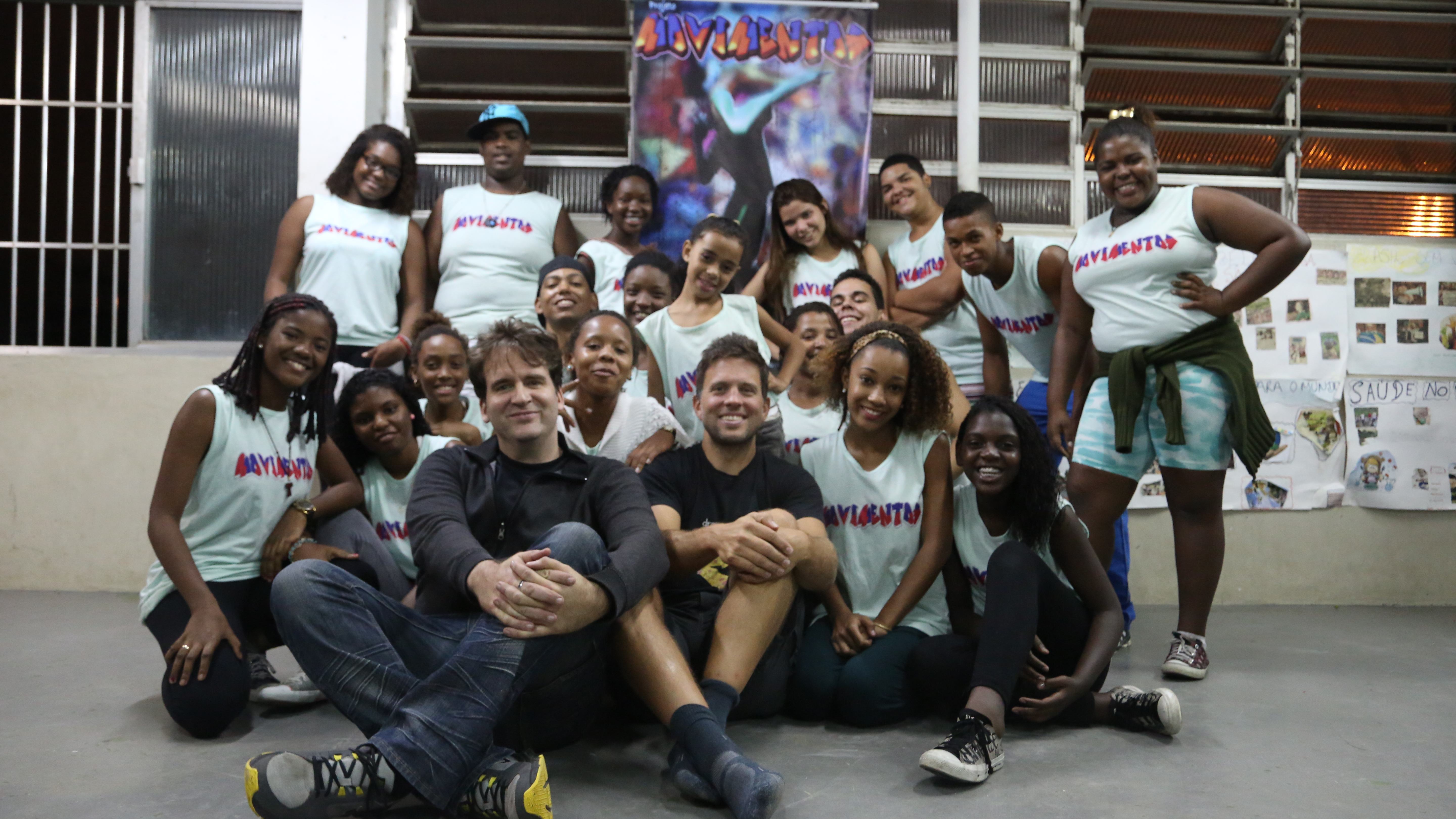
Adany Lima runs the only youth dance troupe, Movimentos, in Cidade de Deos, a favela made famous by a movie of the same name.

Directing “Saving Sally”

sally copyThey say there’s freedom in structure. But how do you tell a story that spans 20 years in a traditional 60-second commercial spot? That was my challenge when Paul McKellips, President of FBR Media, asked me to direct “Saving Sally.” McKellips wanted to show the research and development that goes into developing life-saving medicine, with a focus on the people it saves.

First, I wrote the script with McKellips, who in a former life was a successful film and TV director and producer. Working with him went really smooth.

Visually, my solution was to shoot the spot with two distinct looks: For the bookend scenes with Sally’s family in the hospital room, I wanted to go more realistic and handheld. For the flashback to the years of discovery and progress, I’d do a dreamlike blue, exclusively dolly.

I also wanted to find a way to use visual FX during the compressed flashback scenes to convey complexity and chronology. The FX would be a secondary storyline. I knew the viewer wouldn’t be able to process all the FX in one pass, but that was kind of the point—there’s a lot that goes into developing medicine.

https://vimeo.com/74140895

Then I storyboarded with my friend, Director of Photography Doug Gritzmacher. He did an amazing job visualizing all the scenes in advance—so we could think about how to integrate the visual FX in post.

In post, “Saving Sally” came alive. It was my first time collaborating with the insanely talented Peter Von Elling, whose visual FX wizardry exceeded my expectations.

As a documentary filmmaker, I tend to work on small teams. On location, there’s a lot more concern with reality — however that’s defined. When I’m director/camera on documentary shoots, I follow the action, concerned with emotion, interaction, human feelings. On the “Saving Sally” shoot, I spent days in advance working with a pretty big crew to ensure that we could conjure up emotion on set. It’s a big difference.

still paper copy
This is a good example of the collaboration we had on this project. DP Doug Gritzmacher and I coordinated on the framing of this shot. In the original, the paper is blank. Then Visual FX guru, Peter Von Elling, filled in the paper with “notes” and composited all the other elements as well.

On the day of the shoot, I left Washington, D.C. behind and went to Maryland. Line Producer Kurt Uebersax ran the set like a well-oiled machine. Carl Glorioso, director of the Frederick Film Office, hooked us up with an ideal location at Frederick Memorial Hospital—where we staged some incredibly realistic scenes without trucking in a boatload of extra props.

I knew it was going to be tight—9 scenes in a 12-hour day. With about 20 actors and scenes on three hospital floors, we were moving fast. But it was 10pm and I still had two scenes to shoot, with some serious overtime charges looming—for actors, hospital, etc, if we didn’t wrap soon. I was exhausted and my creative synapses weren’t firing (despite a fourth cup of coffee!). But Gritzmacher (and Gaffer Chris Walter) actually accelerated the pace. I got everything I needed.

In post, “Saving Sally” came alive. It was my first time collaborating with the insanely talented Peter Von Elling, whose visual FX wizardry exceeded my expectations.

Much of my work over the years has been documentary, where you get more time to let events unfold, and time to tell the tale. But this year I’ve been directing more commercials, where every second counts. I’m lucky to have established my video production company in Washington, D.C., where there are really so many talented people working in the business. They really helped “Saving Sally” come alive!


still2 copy
This is another good example of the collaboration we had. DP Doug Gritzmacher was sure to leave a lot of space on the left of this shot so that Visual FX Peter Von Elling could jazz up the shot with all the magical elements you see here.

Winning the Air Force Challenge Ride

steve-airForce-2013-thumbThe 2013 Air Force Cycling Classic Challenge Ride had 1,408 people this year—a fun mix of both avid and recreational cyclists. This was my fourth year. Previously, I’d always bonked at some point and fallen back. Sunday, my objective was to stay with the lead peloton, and then sprint off the front to win. I told a few people this goal, and I got some weird looks — I haven’t done any real categorized road races before. But . . . I’ve been training a lot more this year.

First, my stats: I averaged 23.1mph for 65.1 miles, for a 2:49.03 total time. Here are the results. (Edited: Seven riders completed 8 laps and are listed above the lead peloton in the results, but the fastest among them finished the 7 laps more than 5 minutes and 2 miles behind us . . .)

The Challenge Ride is not to be confused with the Crystal Cup, where world-class pro racers compete about a half hour after we clear the course (JJ Haedo won this year). The weekend series also includes categorized races, with seriously talented Cat 1 to Cat 4 racers competing for small prize money. In fact, watching the Clarendon Cup Saturday for maybe the 8th year in a row, I was blown away by their endurance, power, and bike-handling.

For the last few years, I’ve been riding most Sundays with neighbors. It’s a good group, and can get competitive—in a good way—since they are really strong riders. This year, we have a small contingent going to the Crystal Cup. I meet up at 6:30 with Eric Miller, Phil the Hill, Steve Cahill, Bill Mowery, and Mowery’s son Jack (age 11, a great athlete). Colin Brown will meet us at the starting line, but we never find him.

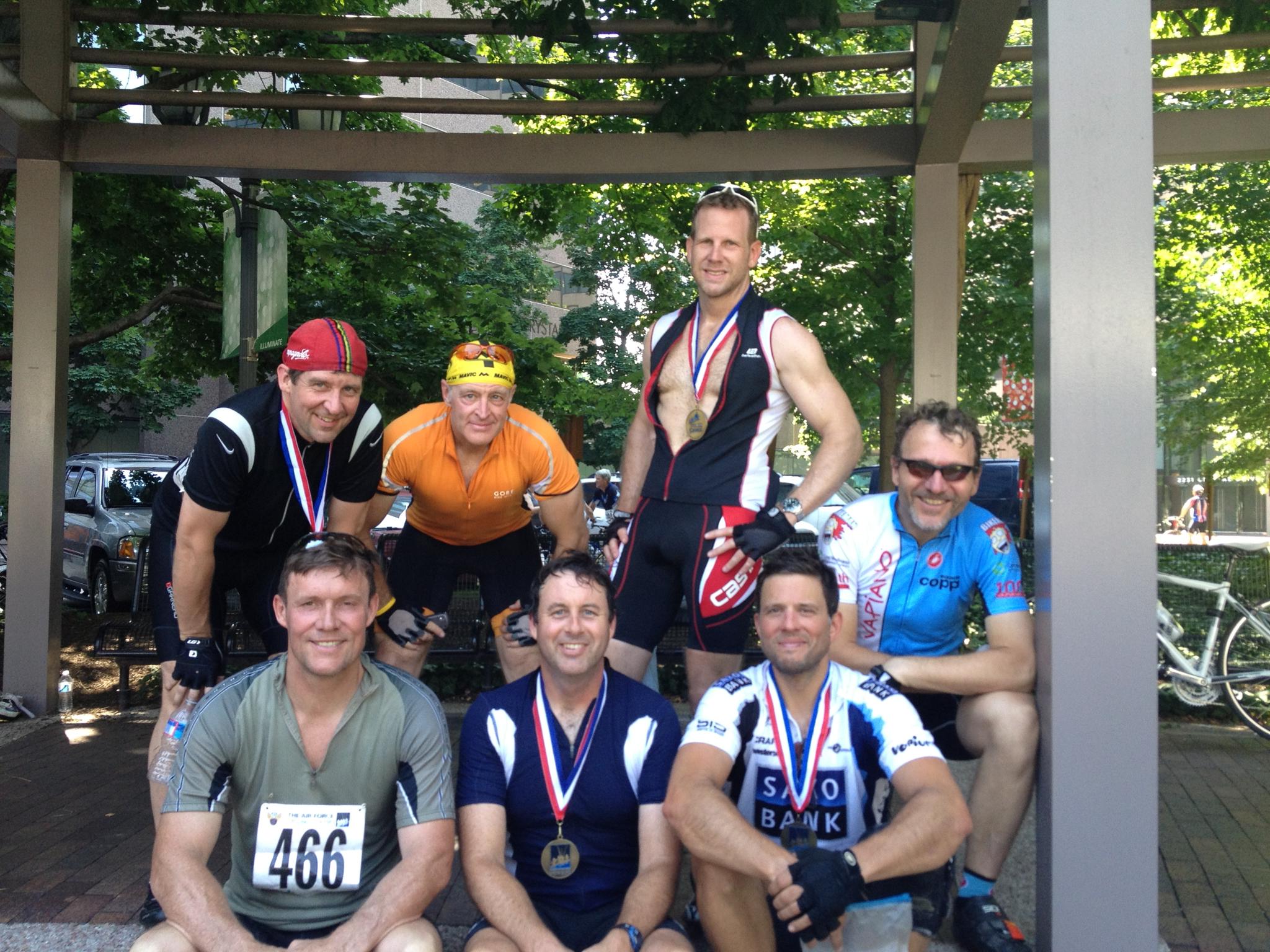
Post ride pic from last year, left to right: Phil the Hill, Bill "Orange" Berlin, Steve Cahill, and Ron Paletzki; bottom: Bill Mowery, Jay Stanley (who won), and me.
Post ride pic from last year, left to right: Phil the Hill, Bill “Orange” Berlin, Steve Cahill, and Ron Paletzki; bottom: Bill Mowery, Jay Stanley (who won), and me.

The start is messy and crowded. I wish I was closer to the front, but participants in various corporate and team challenges get to start up there. Almost as soon as the horn sounds, I lose track of Phil and Eric. Normally, Bill “Orange” Berlin is wearing his eponymous jersey, which serves as an effective beacon. This year, he’s outta town, and we have none.

I’m winding in and out of lots of riders. An early accident gets the adrenaline flowing. About three miles up Route 110, five guys in United Healthcare and DC Velo kits race past with a purpose. That’s our cue. Cahill and I glom on. By the Iwo Jima Memorial, our turnaround, we have a peloton of 15 riders. These guys are out to win it. The size of the group will ebb and flow between 10 and 20 riders until I make my move at the end of lap 6.

The Challenge Ride route is an advertised 16.5k, but really 15.0k (or 9.3 mile loop). In years past, it was a very tidy 12.5k, so when you did 8 laps, you did a metric century, or 100k. This year, I figured I’d do as many laps as the lead group, probably 6 and maybe 7.

While I ride, I review my plan: to sit in with the lead peloton, pull as little as possible, keep as much in the tank as I can, eat a gel every 45 minutes, match any breakaways in the final lap, and then try to separate at the end. I’d figure out exactly where to make my break as we loop around.

Lap 1 is hard. The peloton has not yet coalesced, and we’re jerky. I’m not feeling warm yet, so I stay at the back. The problem is, I keep yo-yoing. At the turnaround, Cahill yo-yos as the peloton accelerates and I lose him. I remember what my friend, ex-racer Ron (see photo) always says about staying in the first third of the peloton, so resolve to move up.

By lap 2, I’m warm. I move up gradually before the Air Force hill and am in the front five riders. The Air Force hill doesn’t seem as tough this year. I just put it in the small chain ring and do a higher cadence, staying around 17mph. The descent, however, is curvy and dangerous, because it’s hard to decide whether to keep it at 40mph when the circuit narrows and you pass a bunch of unpredictable riders going 20.

At this stage, along with three other guys, I somehow gap the peloton and gain some serious time (is there an accident behind us on the descent?). It’s just us for the three miles into Crystal City. The announcer calls us the “chase group” as we race through the start/finish line, but I don’t know what that means. One rider says there’s a single breakaway rider out front, by 20 seconds. So we resolve to pull him back. This is not especially in my strategy, but we start pushing the pace in a rotating pace line of three (this ends up being my fastest lap at 23.7mph). Apparently he doesn’t like my style, and yells “Man, don’t you know how to do a pace line?” Sorry, I meekly respond.

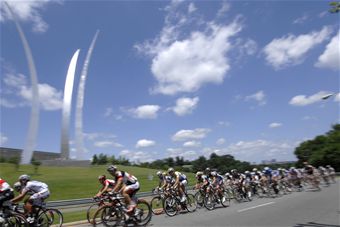
At the Air Force Memorial
At the Air Force Memorial. Check out Tony Estrada Photography to get photos from the ride: www.backprint.com/tonyestradaphotography/‎

Moments later, on the narrow northern stretch of 110, I almost hit a displaced orange cone, swerving left (into oncoming bike traffic) to miss it. The guy behind me hits it squarely, stays up, but the cone spikes up and smacks my nemesis in the face. (We chat about this amicably during a subsequent lap).

The cone incident puts me alone in 2nd place. But I don’t have a clear idea of how far back I am, so I sit up, soft pedal, and wait for a minute for the peloton to catch me. It’s about the 24 mile mark.

Laps 3-5 are routine. There are some strong guys taking long pulls, including a new friend Greg Butler. I eat and drink attentively. I’m focused on the wheel in front of me and not getting in trouble. The peloton is working well together: indicating road hazards, doing all the hand signals, slowing down when we get to accidents. These guys know what they’re doing.

At about the 8-mile mark of every loop, there’s a long gradual 1% downhill and then a sharp 3% uphill as you cross a bridge and drop into Crystal City. It’s typical for the speed to inch up to 30mph, and then slow down to 15mph in the span of les than 20 seconds. Here toward the end of lap 5, at about the 43-mile mark, a rider attempts a break. He gets maybe 10 seconds on us, but we gradually reel him back before the start/finish line.

But this is all the inspiration I need for when to attack!

It’s lap 6, and the gamesmanship begins. The pace slows considerably after the halfway point, and nobody wants to pull. Somewhere in the middle, we finally swallow up the sole breakaway, a super strong cyclist named Tim—he’s been out front by himself for 2 hours! By the Air Force Hill, I’m at the front and get some energy when I see my wife and daughter cheering! I wanted to take the descent first to stay out of trouble. That’s because last year, I got gapped by Jay Stanley here (who went on to win), trapped behind a super slow group. I didn’t want that to happen again.

On the approach to Crystal City, we’re averaging maybe 20 mph (where we’d done 26+ before). I see the bridge about a half-mile in the distance. That’s my cue. I take a swig of water, then use the rest of it to spray my head and try and cool down.

Bam! I make my move, pushing it to about 35 mph on the gradual downhill. I hit the uphill hard, try to maintain as much speed as possible, and enter Crystal City still ahead, yelling “on your left” like a banshee.

Now, the road here is so torn up that even the pros actually complained about the potholes! There are tons of riders, and I’m winding around them willy-nilly. As I make the right turn onto Crystal Drive, I catch a glimpse back over my shoulder—my move has broken up the peloton. There’s a string of 5-6 riders behind me. I don’t look again. I’m getting dog tired, but just push it as hard as I can the final quarter mile or so.

I cross the finish line first, which is kind of a new and amazing feeling. I sit up and try to catch my breath. A few seconds later, Greg rides up (I note he’s not breathing that hard!) and says, “we’re doing one more” . . . UGH!! I’m so dead after that sprint! Had I miscounted?

This is definitely my low point. I’m out of breath, out of water, and the peloton is down to only five guys, so it’s gonna be harder to hide. I just catch a wheel and determine not to drop off. At this point, I honestly am confused and still don’t know if I’ve done 5 laps or 6 (the discrepancy with the loop length, and the math involved doesn’t help!). When it’s my turn to pull, I demur, and go straight to the back.

The first half of this lap is a total blur. One guy falls off the pace. Then another. Then Greg signals me as if to say, “I’m dropping back.” Now it’s just Tim and me.

To be fair, Tim Kelley is a better cyclist than me. His name is all over Strava and he’s clearly a beast. His first lap was the single fastest lap of anybody in the Challenge Ride, averaging 24.7mph—a minute faster than my fastest lap. However, I know that he decided to test himself with a solo breakaway for more than two hours, which means he’s tired.

Tim’s not too troubled that I suck his wheel for the final 4 miles, nor that I jump him with about 300m to go. I round the final curve in full sprint mode, determined to give it my all. And then! I hit a pothole and drop my chain from big to small. While I’m struggling to put it back, he passes me. I get back in gear and struggle to catch him . . . finishing in a dead heat!

We congratulate each other, and I seek out my friends. When I see the results Monday, my time is about 5 seconds ahead of Tim’s. I know it’s not a legit categorized bike race, but it was loads of fun!